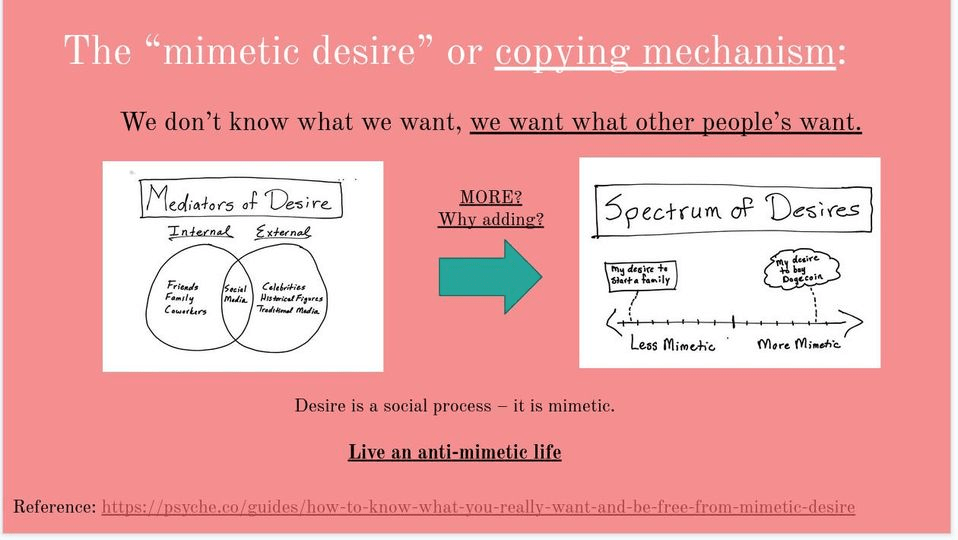
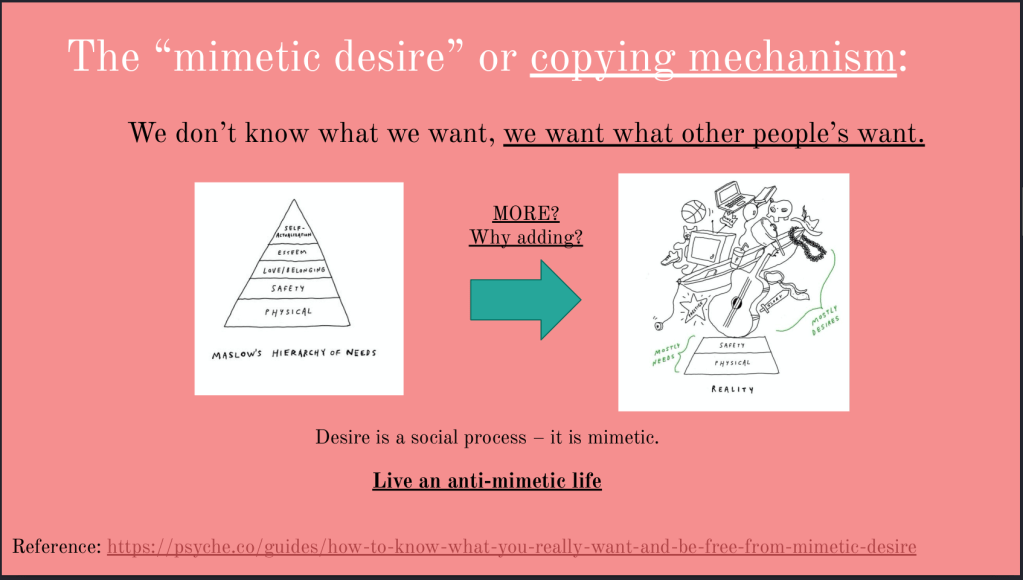
Mimetic desire is a concept in psychology and philosophy that refers to the tendency for people to imitate or desire what others around them desire. This idea was first introduced by French philosopher René Girard, who believed that our desires are often influenced by the desires of others, rather than being innate or personal.
According to Girard, humans have a natural tendency to imitate others, particularly those we admire or see as models for behavior. This imitation can extend to our desires, leading us to want what others want simply because they want it. This phenomenon is especially strong when it comes to desires that are seen as socially desirable or prestigious, such as material possessions, social status, or romantic partners.
Mimetic desire can have both positive and negative effects. On the one hand, it can be a source of social cohesion and shared values, as people bond over common desires and aspirations. On the other hand, it can lead to competition, conflict, and even violence when multiple people desire the same thing or when a desire becomes so strong that it overrides other considerations.
Overall, mimetic desire highlights the importance of social influences on our behavior and suggests that our desires are not entirely our own, but are shaped by the desires of those around us.
Mimetic Desire – (Part. 1) – Human: www.fedmartraining.com
 fedmar