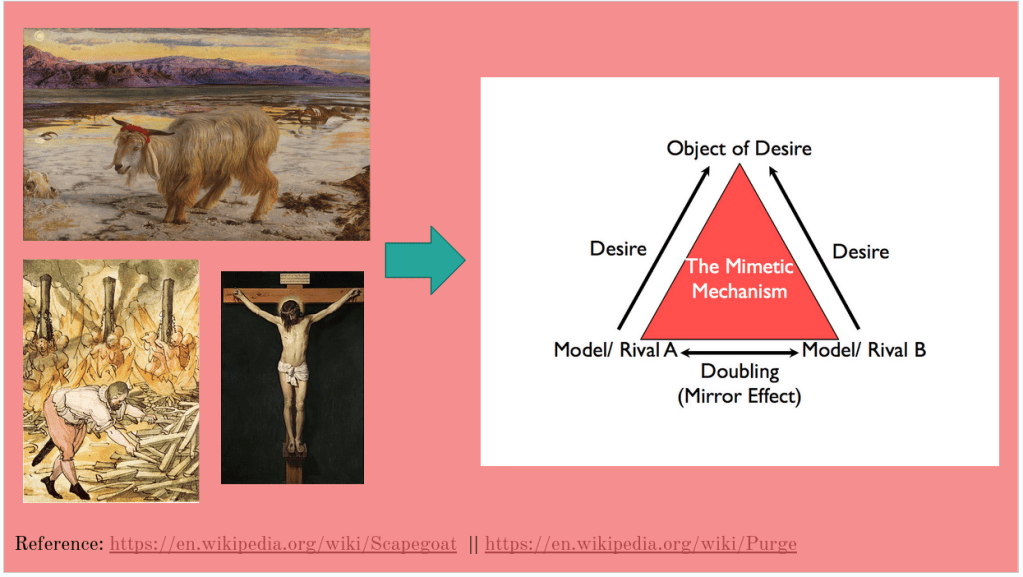
Scapegoating is a phenomenon in which a person or a group of people is blamed for problems, conflicts, or failures that are not entirely their fault. In this situation, the scapegoat becomes the target of collective anger, frustration, or resentment, and is unfairly held responsible for the problems of the group.
Scapegoating can occur in various settings, such as families, organizations, communities, and societies. It can take many forms, including ethnic or racial scapegoating, where a certain group of people is targeted based on their ethnicity or race, or organizational scapegoating, where an individual or group is blamed for the problems of an organization, even if they are not directly responsible.
Scapegoating is often used as a way of deflecting attention from the real sources of problems or conflicts, and it can serve to maintain the status quo or to reinforce existing power structures. It can have serious consequences for the person or group being scapegoated, including social exclusion, stigmatization, discrimination, and even violence.
It is important to recognize and challenge scapegoating behavior, and to promote a culture of accountability, where individuals and groups are held responsible for their actions, rather than unfairly blaming others for problems that are beyond their control.
Scapegoating practices can take many forms, and can occur in various settings, including families, organizations, communities, and societies. Here are some examples of scapegoating practices:
- Ethnic or racial scapegoating: Blaming a particular ethnic or racial group for problems in society or within an organization.
- Political scapegoating: Blaming a political party, leader, or ideology for problems in society or within an organization.
- Blaming the victim: Holding a victim of a crime, abuse, or harassment responsible for what happened to them.
- Workplace scapegoating: Blaming an individual or a department for problems within an organization, even if they are not directly responsible.
- Family scapegoating: Blaming one family member for problems within the family or for the dysfunction of the family.
- Religious scapegoating: Blaming a particular religion or religious group for problems in society or within an organization.
- National scapegoating: Blaming a particular nation or group of nations for problems in society or within an organization.
- Educational scapegoating: Blaming students, teachers, or educational institutions for problems within the education system.
- Economic scapegoating: Blaming a particular economic group or industry for economic problems in society.
- Environmental scapegoating: Blaming a particular group or industry for environmental problems in society.
It is important to recognize and challenge scapegoating practices, and to promote a culture of accountability, where individuals and groups are held responsible for their actions, rather than unfairly blaming others for problems that are beyond their control.
 fedmar